Showing posts with label roadster. Show all posts

Nissan Mixim Concept

Monday, November 3, 2008


Nissan Mixim Concept Car

The 62nd annual Frankfurt Motor Show is the launching pad for hundreds of new models, from concept cars to brand new production cars. It's always a busy time for everyone in the auto industry, including revitalised Japanese brand Nissan.

The Asian car maker used this year's Frankfurt Motor Show to preview an all new concept car, a one-off show car based on an existing model and a heavily revised production car.

The Mixim Concept Car, explains Nissan, is a compact vehicle for young drivers who are mostly engaged by their computer and the world via the Internet. The driver sits centrally, with two seats either side, while the steering wheel and controls are inspired by the interfaces so familiar to computer gamers.

By shifting its focus to younger drivers with specific models, Nissan hopes to set in motion the next few decades of prosperity. Though the Mixim isn't destined for production, many of the innovations pioneered may be integrated into future production models.

The Mixim is also an environmentally friendly vehicle, powered by Nissan’s "Super Motor" electric motor/generator and using compact lithium-ion batteries. Nissan says it has unusually rapid performance combined with a "usefully" extended range. Sitting on a 2530mm wheelbase, Mixim is 3.7m long, 1.8m wide and 1.4m tall, making it shorter and lower than Micra.

It weighs just 950kg, very light, and two of Nissan's "Super Motor" powertrains are used on the Mixim: one powers the front axle and a second drives the rear axle, allowing for all-wheel drive.

While the technology located under the Mixim Concept Car's skin is imaginative, the styling too cannot be dismissed as dull. The exterior design has a bulbous coupé shape, one that ensures it will not be easily ignored in Frankfurt.

With a wraparound windscreen, said to be inspired by the visor of a crash helmet, the middle of the car rises sharply and features a sharply truncated rear. The doors are also a design highlight, opening upwards and outwards in an exotic fashion.

The interior of the car is just as conceptual as the exterior, with a truly futuristic motif. The steering wheel, for example, looks like it was inspired by the controls of an aircraft, and even the seats feature an ergonomically futuristic design.

The second compact model that Nissan has confirmed for its Frankfurt Motor Show exhibit is the Micra Colour + Concept show car. As Nissan explains, this vehicle was designed and conceived at Nissan Design Europe, in London, to showcase the latest colour and paint technology and to highlight the changes that have been made to the entire Micra range.

It has been given a two-tone treatment with a Liquid Metal gold paint effect running over the top of the car and contrasting with the three coat pearlescent white finish on the car's flanks.

Nissan says that inside the Colour + Concept theme continues with a high contrast between the upper and lower portions of the interior. Re-upholstered in sumptuous white leather, the seats have accented detailing and stitching. Carpets and lower internal panels are a darker acid yellow to contrast with the pale upper portion of the dashboard.

Nissan will also debut a "more mature Micra", expected to be a mid-life update. As the company states, the new Micra will feature subtle changes to the exterior and interior.


Source : http://www.webwombat.com.au/motoring/news_reports/nissan-mixim-concept-new-micra.htm

Nissan Pivo 2 Concept

Nissan Pivo 2 Concept car

Tokyo, Japan — One of the many concept cars being readied for the Tokyo Motor Show in Japan is this iPod-inspired vehicle. With a design that's best described as odd and/or bulbous, it features accelerator and brake pedals embossed withaudio player symbols: fast-forward and stop.

According to Nissan, the Pivo 2 is an advanced electric concept car that builds on the popularity of the first Pivo, which was shown at the 2005 Tokyo Motor Show. Power comes from environmentally friendly compact lithium-ion batteries.

More of an entertaining way of transport than a traditional car, it even features a "highly innovative Robotic Agent". Drivers will never be lonely again, as the robotic companion can converse in both Japanese and English dialects, and was created to make journeys less stressful. The robotic agent is also instrumental in operating the cars functions, from heating and cooling to navigation.


The entire front end of the car opens up via a large door to allow the driver and his two passengers access, and because it features a rotating cabin (the entire cabin can swivel 360 degrees) there is no need for a reverse gear.

The vehicle is made even more nimble thanks to four wheels. Each of the four wheels are powered by advanced electric in-wheel '3D Motors', which can then swivel 90 degrees allowing the Pivo 2 to drive sideways as well as forward.


Nissan's new Pivo 2 concept will be exhibited alongside with four other production and concept vehicles at the Tokyo Motor Show, which starts on October 27th.

Source: http://www.webwombat.com.au/motoring/news_reports/nissan-pivo-2.htm

Nissan Pivo Concept

Nissan Pivo concept car

October 24, 2005 One of the stars of the 2005 Tokyo Show, the Nissan Pivo concept car is an electric car with unique revolving cabin, compact packaging, multiple drive-by-wire systems and excellent visibility. The Pivo concept car examines the potential of future electric vehicles. The Pivo's most distinctive feature is its cabin that revolves 360 degrees, eliminating the need to reverse. A compact body also makes the car exceptionally easy to maneuver. Excellent visibility is enhanced by Nissan’s Around View technology, which helps reduce dangerous blind spots. The navigation and audio systems are simple to operate while driving. These features are supported by Nissan’s innovative environment-friendly technologies such as the Compact Lithium-ion Battery.

Easy-to-drive and user friendly

Outstanding maneuverability: Pivo is ideal for urban driving. It can easily pass oncoming traffic even on the narrowest streets and is a cinch to park in the tightest of spots. Pivo seats three passengers comfortably despite an overall length of just 2,700 mm. The driver sits front and center while two passengers sit side-by-side in the rear. Tall, electrically-powered sliding doors make it easy to get in and out without hitting your head.

There’s no going back: Parking in a tight spot invariably requires backing in inch-by-inch. But with Pivo there’s no going back; you simply pivot the entire cabin – hence the concept’s name. This ability to park while always looking forward is enabled by Nissan's advanced drive-by-wire technologies that preclude the need for mechanical connections between cabin and chassis.

Easy to operate with no hidden dangers: Today’s urbanites are deluged with information from all sides. But Pivo manages the flow with a host of telematics features that deliver the right information at the right time. The driver can control the information flow without taking the eyes off the road. What’s more, visibility is enhanced by see-through pillars, Nissan's Around View Monitor and other innovations that reduce blind spots.

Futuristic exterior and interior Inside and out, Pivo’s state-of-the-art innovations are showcased by a design that is futuristic yet friendly. Front and rear lamps feature a clear, clean-looking design. And the exterior even features oval recesses both front and rear that are covered with soft materials – comfy places to sit outside when Pivo is parked. You find the same thoughtfulness in a soft, organic interior that extends from the center of the revolving egg-shaped cabin, which is the Pivo's most unique feature. Because the platform has a longitudinally symmetrical design, the driver's perception of the car's corners does not change even when the cabin is rotated 180 degrees.

Advanced technologies enhance driving experience Pivo is powered by a Nissan-developed high-performance Compact Lithium-ion Battery and Nissan’s unique Super Motor. The result is zero emissions. Beyond this outstanding environmental performance, the electric powertrain enables a highly compact body. Designers made the most of Nissan’s Compact Lithium-ion Battery – which, being flat, require much less space than conventional cylindrical cells – to achieve remarkable packaging efficiency. Even more space and weight savings are achieved with Nissan’s Super Motor. One Super Motor on each axle delivers power to two shafts, each of which can be controlled independently. This allows efficient distribution of torque to all four wheels with two (not four) electric motors.

Pivo's unique revolving cabin is just one of the myriad possibilities enabled by Nissan’s multiple drive-by-wire technologies. These include steer-by-wire, brake-by-wire and shift-by-wire systems that replace mechanical linkages with electronic signals. By eliminating the need for mechanical links between cabin and chassis, designers were able to create the unique pivoting passenger compartment. Drive-by-wire technologies afford even more flexibility inside the cabin as the layout of steering, braking and other functions is no longer governed by mechanical linkages. Even better, drive-by-wire systems mean less weight and fewer mechanical parts.

See-through pillars and Nissan’s Around View Monitor helps to reduce dangerous blind spots. Cameras mounted on the outside of each A-pillar feed an accurate image of the surroundings to screens mounted on the inside of the pillar. The net effect is pillars that become virtual windows. The Around View Monitor meanwhile generates a 360-degree view of the car’s surroundings on a dashboard monitor. Cameras positioned front and rear on both sides of the car capture images of the surroundings. An innovative image processing technique synthesizes these images into a single bird’s-eye view.

A dash-mounted infrared (IR) commander allows drivers to operate the navigation system and audio system without taking an eye off the road or fumbling around for controls. It’s a new type of human-machine interface (HMI) that uses an infrared camera and Nissan’s "Magic 4" concept. You simply point fingers at the infared commander to choose from any of four items on a menu. If you want item number three, hold up three fingers. Or, for example, if you want the music louder, just motion upwards with your hand.

Thanks to Nissan's Horizontal Display there is even less need to take an eye off the road – because information is displayed along the bottom of the windshield. This system, first featured in the Serenity concept shown at the Tokyo Motor Show two years ago, displays information in the manner of movie subtitles. This innovative display system supports Nissan's future telematics interface concept. For example, in “City Browsing mode,” the system can display information transmitted live from nearby locations. What’s that building up ahead? City Browsing labels it.


Source: www.gizmag.com

Mazda "Furai" Concept


Mazda "Furai" Concept

“Furai,” simply translated, means "sound of the wind"

Is the fifth iteration or evolution of Mazda's new design language exemplified in its initial Nagare concept, which you may recall meant “flow.” Far from just a piece of artwork on wheels, this working concept actually began life as one of Mazda's 2006 season ALMS P2 race cars.

Built on a Courage C65 chassis and powered by a 450-bhp 3-rotor rotary engine, this ethanol (E100)-powered concept car is an exercise in reverse homologation: It represents an ideal within the Mazda philosophy, and that is to bridge the gap between single-purpose race cars (ALMS) and street-legal models (Ferrari Enzo, Lotus Elise), according to Mazda's Director of Design, Franz von Holzhausen.

The complex outer shell of the Furai clearly follows its predecessor's design trends, but through the guidance and expertise of Swift Engineering also functions aerodynamically. Front-fascia channels direct air to the brake ducts as strategically placed louvers on top of the front wheel fenders aid heat evacuation and help suck the front end closer to the ground. Its sculpted flanks create turbulence which draws air to the side ducts that help keep the engine cool in conjunction with the radiators mounted in the car's sidepods. Aft of the gullwing doors, flow-directing details continue to guide air over the car's rear haunches toward a large, functioning, adjustable-element spoiler. The sharp element you see protruding from the roof is called an Air Fang, and was designed by the guys at Swift to optimize ram air induction. The air split by the Air Fang creates vortices which force air down into the intake

HIROSHIMA, Japan, Dec. 12 /PRNewswire/ -- Mazda Motor Corporation will showcase the world premieres of the Mazda Furai concept vehicle and the heavily revised 2009 Mazda RX-8 sports car at the 2008 North American International Auto Show (NAIAS), to be held in Detroit from Sunday, January 13 through Sunday, January 27, 2008. On the heels of its show-stopping debut at the 2007 Tokyo Motor Show in October, the Mazda Taiki concept vehicle also will make its North American debut, the first time it has been shown outside Japan.

Inspired by the fact that, on any given weekend, there are more Mazdas and Mazda-powered cars road-raced in the United States than any other brand, the Mazda Furai (Japanese for "sound of the wind" and pronounced "fu-rye") is the sort of car that could only come from a company that incorporates the "Soul of a Sports Car" into everything it builds, but with an eye toward the future and the environment through the use of 100% ethanol produced in partnership with British Petroleum (BP).

Furai takes Mazda's unique Nagare (Japanese for "flow") design language a step further as it is translated into a concept car based on an American Le Mans Series (ALMS) racing car. The car utilizes the Courage C65 chassis the company campaigned in the ALMS series only two seasons ago, and the 450-hp three-rotor rotary engine that distinguishes it from anything else on the track.

Says Franz von Holzhausen, Mazda's North American director of design, "Furai purposely blurs boundaries that have traditionally distinguished street cars from track cars. Historically, there has been a gap between single-purpose racecars and street-legal models -- commonly called supercars

-- that emulate the real racers on the road. Furai bridges that gap like no car has ever done before."

Mazda's critically acclaimed Nagare design language describes the flow of water, air, people or things moving in one direction. Mazda Nagare is flow, with an insightful and spirited styling, which, in Mazda Furai, invokes a raw, unfettered desire to possess everything this car represents.

Chevy Camaro concept


Chevy Camaro concept

The new Camaro features design elements from the '69 Camaro and other Chevy performance cars are given a modern adaptation to the Camaro concept. The linear Proportions, short front overhang, longer rear overhang and powerful fender shapes all speak to its athletic prowess. Functional design is apparent with the front opening port, hood bulge and brake port all serving a performance function. This concept car places the powerful heart into a form-fitting angular package and gives it a forward-thrusting aspect. Just the thought of it gets your heart racing.


Chevy is pleased to announce that the day you've been waiting for has arrived – you can submit an order for a 2010 Chevy Camaro (scheduled to be available spring 2009) starting Monday, October 13, 2008.(1)

Chevy dealers across the country will be able to submit customers' orders for the new 2010 Chevy Camaro Coupe, with its outstanding performance and efficiency, sleek styling and unexpected array of features, including:

- Price starting at $22,995(2)

- Choice of six-speed transmissions: manual or TAPshift automatic

- Projected 300 hp DOHC V6 engine that gets an estimated 27 MPG hwy with automatic transmission(3)

- Projected 400 hp V8 engine with automatic transmission and Active Fuel Management for added fuel savings

- Projected 422 hp V8 engine with manual transmission

- 4.5-link independent rear suspension

- Six air bags(4)

- Bluetooth® wireless technology available for select compatible phones(5)

- USB connectivity available on select models

- Standard one-year OnStar Safe & Sound plan(6)

The 2010 Camaro Coupe is scheduled to start production in spring 2009. So be one of the first to take the wheel of the new Camaro. Open the PDF link above; choose your trim level, options and color, then visit your local Chevy dealer to get complete pricing details and order your 2010 Camaro Coupe today.


Source: http://www.chevrolet.com/camaro/


Peugeot MoVille Concept

Saturday, November 1, 2008

Peugeot MoVille
Peugeot MoVille Concept Takes Teardrop Styling To New Level


It looks like something you'd expect to see at the Tokyo Auto Show, but this Peugeot MoVille concept rendering is actually Woo-Ram Lee's entry in a design contest put on by Peugeot. The competition pits designers from all over the world against each other, with the winner having his or her car (or whatever you want to call it) built in full-scale form. Last year's winner, the Flux, is now even available as a download to drive around in Project Gotham Racing 4. As for this MoVille, we're not so sure we'd want to race it online against taurine-saturated gamers, but the teardrop shape sure does put an elegantly French spin on the trendy omnidirectional future-pod shape.


BRB EVOLUTION


BRB EVOLUTION

This is the BRB Evolution —a unique sports car concept, designed by 22-year-old British engineer Daniel Bailey, that folds itself in half lengthwise to fit into tight parking spots. The concept car would fold itself into half its length by jacking itself up on its nose and tucking its rear wheels beneath. Bailey claims he was inspired by the Lamborghini Murcielago and Peugeot 908, but given the car’s appearance and Mr. Bailey’s youthful 22 years, we suspect reefer, Mountain Dew and repeated playings of Transformers may have also been involved.

"ITS A FOLDING CAR"

MAGNET CARS


Mazda 2009 RX8

Mazda 2009 RX8
RX-8 was designed with an athletically sculpted exterior that provides a sense of originality unrivaled in the marketplace today. The 2009 RX-8 received design enhancements that freshen the styling and give the RX-8 a new look, while maintaining the basic design theme. Refinements include restyled front and rear bumpers and front fascia; sporty, high-quality finish front and rear headlamps; and larger exhaust pipes (now measuring 90 mm across) and a new 5-spoke wheel design.
STYLING INNOVATION

The RX-8's interior boasts a comfortable and intelligently designed cabin. Minor enhancements were made for the 2009 RX-8 to provide a simple and functional interior design that supports driving pleasure. The center IP shape was redesigned to give a feeling of dynamic movement and a new steering wheel, and redesigned front and rear seats were also added. The rotary design element is incorporated in the interior of the RX-8 in creative ways, appearing in the seats. Through the use of advanced ergonomic research, Mazda engineers built optimum support in the front seats to enhance the thoroughly enjoyable driving experience.

Through-and-through, the RX-8 is a pure sports car that gives the driver an exciting and dynamic experience. For 2009, engineers improved body rigidity on the RX-8 through the addition of structural reinforcements, via a newly added trapezoidal shock tower bar and enhancing the local rigidity of the front-suspension tower areas. Also, the rear-suspension geometry has been reconfigured for better handling and driveshaft rigidity, lowering NVH levels and improving performance. In addition, the differential gear ratio on manual transmission-equipped cars is lowered from 4.444 to 4.777 for improved off- the-line performance. These performance changes give the RX-8 increased acceleration and performance, as well as even greater responsiveness — always a rotary engine and RX-8
hallmark.

DYNAMIC DRIVING EXPERIENCE


The 2009 Mazda RX-8 is available as either a 232-horsepower* 6-speed manual transmission, or a 212-horsepower* 6-speed Sport automatic transmission with steering-wheel-mounted paddle shifters for a Formula 1-style driving experience. The RENESIS engine is remarkably smooth and high revving — all the way to 9,000 rpm (7,500 rpm on Sport AT-equipped models). The RENESIS engine features side intake and exhaust ports with nearly 30 percent more intake port and twice as much exhaust port than its predecessors. The efficiencies gained through shortening the intake/exhaust overlapping period and using the larger intake and exhaust ports in delivering world-class performance. Through the incredible efficiencies of a rotary powerplant, an advanced three-stage intake system and an electronic throttle, the RENESIS engine delivers smooth, linear power on a grand scale.

ULTIMATE PERFORMANCE: RX-8 R3

The 2009 RX-8 will offer a new R3 trim level. Providing the very best in rotary-powered motoring, the R3 hearkens back to the R1 and R2 packages offered on the mighty third-generation RX-7, and adds a sport-tuned suspension with Bilstein® shock absorbers and front-suspension crossmembers filled with urethane foam for a smoother ride, minimized NVH and greater suspension control. On the visual side of the R3 trim level, a rear spoiler, side sills and sporty front bumper were added to give an aggressive appearance, along with 19-inch forged, aluminum-alloy wheels with high-performance tires. Inside, the R3 includes a 300-watt Bose® Centerpoint® Surround System with AudioPilot® noise compensation technology, Bluetooth® hands-free phone system, front Recaro sport seats with leather side bolsters, leather-wrapped parking-brake handle and Mazda Advanced Keyless Entry and Start System.

Source to all mazda cars: www.mazdausa.com

MAZDA TAIKI

Mazda Taiki

The Mazda Taiki, revealed at the 40th Tokyo Motor Show in October 2007, culminated Mazda's theme for the show "Sustainable Zoom-Zoom – Mazda's showroom today and in the future." The Mazda Taiki sets a new ideal for the front-engine rear-drive sports car of the future and continues the evolution of the Nagare design theme, following in the footsteps of the Mazda Nagare, Mazda Ryuga, and Mazda Hakaze concept vehicles. The challenge to create "a design that visually expresses the flow of air" was inspired by the image of a pair of Hagoromo—the flowing robes that enable a celestial maiden to fly in Japanese legend—floating down from the sky. Inspired by Japanese koinobori—the decorative "climbing carp streamers"—the notion of creating an Air-tube became the concept word for the interior design. As the fourth in the series, Mazda Taiki further advances and refines the theme through a fusion of the Nagare (flow) design concept and real-world technologies, such as a next-generation rotary engine and enhanced aerodynamic performance.

In developing the next-generation RENESIS, Mazda made a thoroughgoing revision of engine dimensions including the trochoid rotor housing, adopting a longer stroke and larger displacement of 1600cc (800cc x 2) aimed to raise thermal efficiency and boost torque at all engine speeds. By employing the Hydrogen RE design policy of a direct injection system and aluminium side housing, as well as various other measures, we are further promoting the rotary engine’s merits of light weight and compact size.


MAZDA RYUGA


Mazda's provocative Nagare (pronounced "nah-gah-reh") - Japanese for "flow" - concept car, revealed at the LA Auto Show, introduced a new surface language that evokes the emotion of motion in a stationary automobile.


Evolving that idea further, Laurens van den Acker, Design Division General Manager for Hiroshima, Japan's Mazda Motor Corporation, revealeds the Ryuga (pronounced "ree-yoo-ga") - Japanese for "gracious flow" - concept, at this year's North American International Auto Show in Detroit.


"Ryuga celebrates refined and controlled motion," van den Acker said. "Nagare is a dream or an emotion that's just beginning to take shape; Ryuga extends that idea by adding definition.

"To draw this new surface language closer in time to a car Mazda will produce for sale, we've added interior and powertrain details that were purposely absent from Nagare," van den Acker continued. "In addition, large wheels placed at the far corners of Ryuga's exterior lend a highly stable, balanced stance. The aggressive wedge shape imparts motion even when this sports coupe is parked. Volumes that are small in front, larger at the rear, wrap around and over the wheels to give the exterior tension and direction.


"After we began studying natural phenomenon for inspiration, Mazda designers were initially hesitant to apply their findings, but I encouraged them to blend artistic and sculptural beauty to see where it led. Once we did, the results were both original and instantly appealing.


"While this initiative began with textures inspired by nature, it goes much deeper than that. We're looking at grand gestures that wrap all over the vehicle's exterior and throughout the interior. Some of the proportions are dramatically wind-swept. There's drama at every turn. There are no square corners."

Lamborghini Concept S


Lamborghini is going to unveil Lamborghini Concept S concept car at 2005 Geneva Motor Show in March. The car is designed by Luc Donckerwolke who heads the design department at Centro Stile Lamborghini in Sant Agata, Bologna. Donckerwolke was inspired by the single sitter racing cars from the past.


The classic car has many spectacular features. The windscreen is quite different then a traditional car. They have made use of "saute-vent" a french term which means "a sudden change in the wind". The air with this design is directed over the driver's head. The engine is positioned behind the seats and the cabin is divided into 2 compartments. With electronically controlled, retractable central rear view mirror, the driver could have a view of happenings behind the car.

The aerodynamics for the car is also futuristic which is optimised by front and rear spoilers and a large rear diffuser.

Koenigsegg Edition

Koenigsegg Edition
On the 4th March 2008, we will be unveiling our latest creation: the Koenigsegg Edition. The Edition will be on show at the Geneva International Motor Show between the 4th and the 16th March 2008.

The Edition is the ultimate supercar – a Koenigsegg at its most extreme - built to break records and deliver breathtaking performance. Only a very few models will be produced, in order to ensure exclusive status amongst supercar owners.

It has a clear, fully visible carbon fibre body, and is available in two versions: the 4.8 litre 888bhp CCX Edition and the CCXR Edition, which can be driven on environmentally friendly ethanol E85 and E100 fuels, as well as regular petrol. When run on E85 fuel the 4.8 litre engine produces 1018 bhp.

Furthermore there are many unique details on the car. The new forged, machined and polished aluminium Edition wheels for example, which are extremely light and incorporate optimum brake cooling. The bright, polished surface of the wheels was chosen to maximize the contrast against the exclusive black clear carbon body.

The Edition interior is clad in striking red leather and features a special version of the Koenigsegg Chronocluster including a redesigned centre console. All the interior aluminium parts are anodized in a specially formulated Koenigsegg Edition tone that has a unique and purposeful look.

The Edition has a high performance specially developed rear wing, a larger front splitter plus side front strakes. The aerodynamics have been verified and optimized in CFD and in real life on the Koenigsegg test track in Sweden and on various proving grounds in Europe, in order to achieve maximum downforce. Together with the lower ride height, modified shock absorbers, modified springs and anti roll bars, this makes the car perfectly suited for both serious track fun and winding country roads. There is also the option of Michelin Cup tyres and paddle-shift if so desired.

Prices for the CCX Edition start at 1,330,000 Euros net.
Prices for the CCXR Edition start at 1,500,000 Euros net.


Koenigsegg Special Edition cars

Due to request from certain Koenigsegg Clients and Customers, Koenigsegg has created a Limited Edition version of it's sought after cars.

The Koenigsegg Edition comes in two limited versions, the CCX and CCXR models.

It features a 5.0L twin supercharged Koenigsegg engine, together with many other unique features. The car is more track biased compared to the standard models, as it has stiffer springs and anti-roll bars, reset dampers and lowered chassis. It also features a fully visible carbon body a large adjustable rear wing, larger front splitter and side strakes for increased down force and a unique forged wheel design.

The interior is also reworked and features; color matched leather carpets, Edition side step plates, Edition chronograph instrument cluster, New edition only layout for the center consol control panels.

All other extra equipment comes as standard, such as Carbon Wheels, Special interior trim and color, Rearview camera, Satnav or Bluetooth, Amplifiers, complete Inconell exhaust system in order to save weight.

The Edition cars will be built in two different versions, a CCX model limited to 14 cars with 888 bhp and a CCXR (Bio flexi fuel) model limited to 6 cars with 1018 bhp. The price for the 888 hp CCX is 1 330 000 Euro, and 1 500 000 Euro for the 1018 hp CCXR (E85/petrol flex fuel) version. Editor's note: this is approximately $1,955,632 for the CCX and $2,205,600 for the CCXR. The two first of each version are already spoken for.

Each car comes with 5 years free Service and Warranty.

Unveiling of the Edition versions will be at the Geneva Motor show in March 2008, where the first delivery will take place.

Both cars come with a five-year factory warranty.


Source - Koenigsegg and conceptcarz.com

2008 Audi LeMans

2008 Audi R8 V12 TDI LeMans


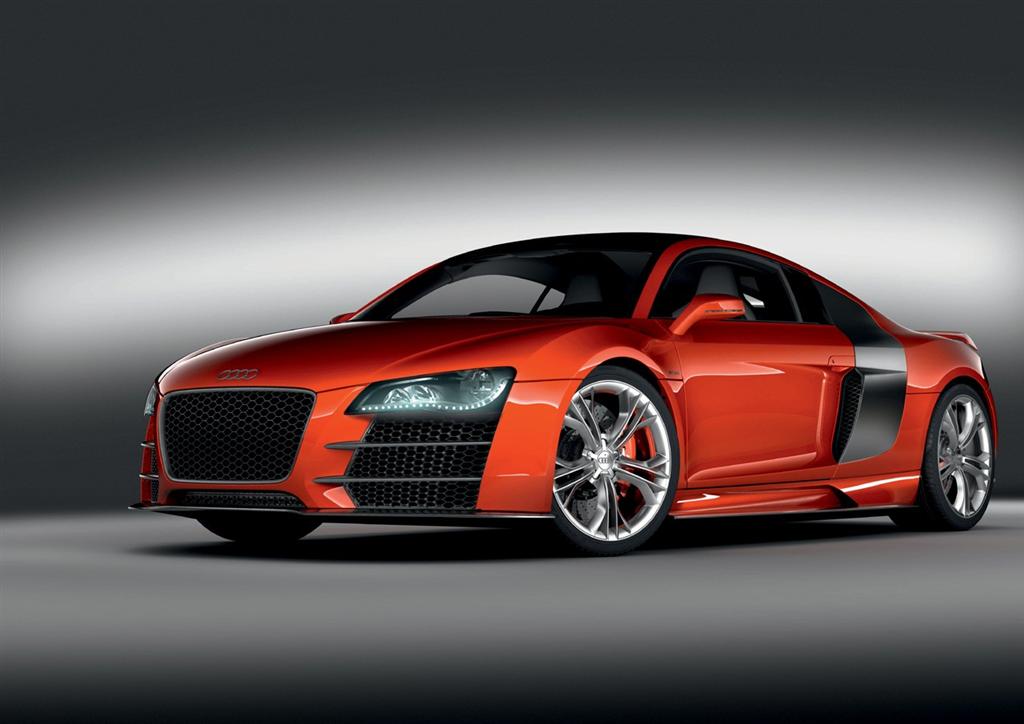
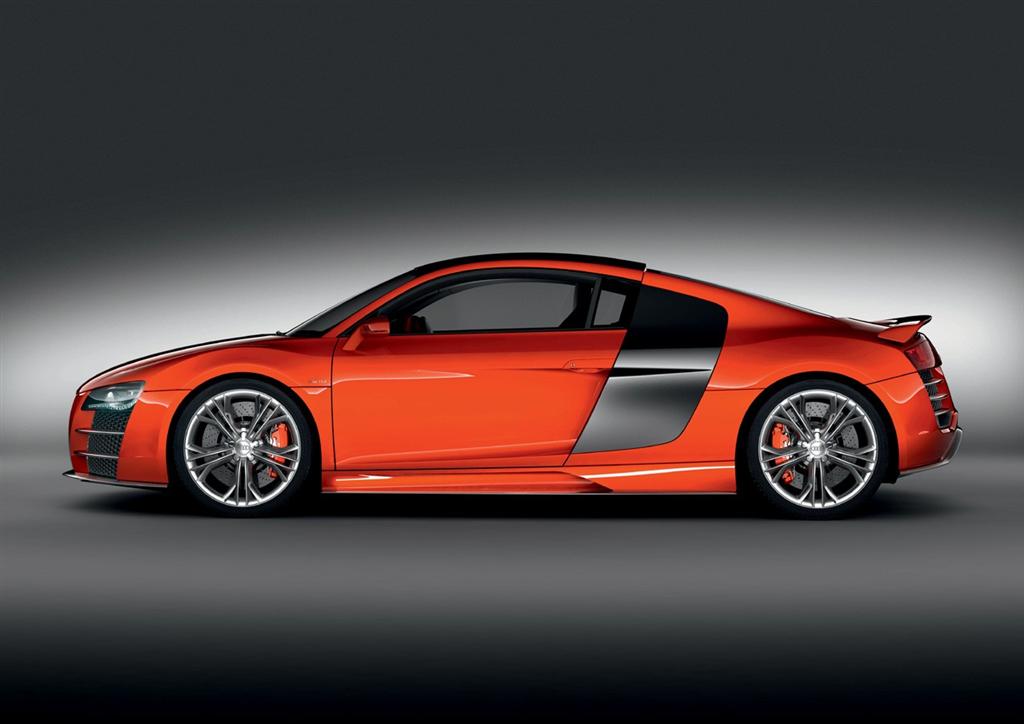
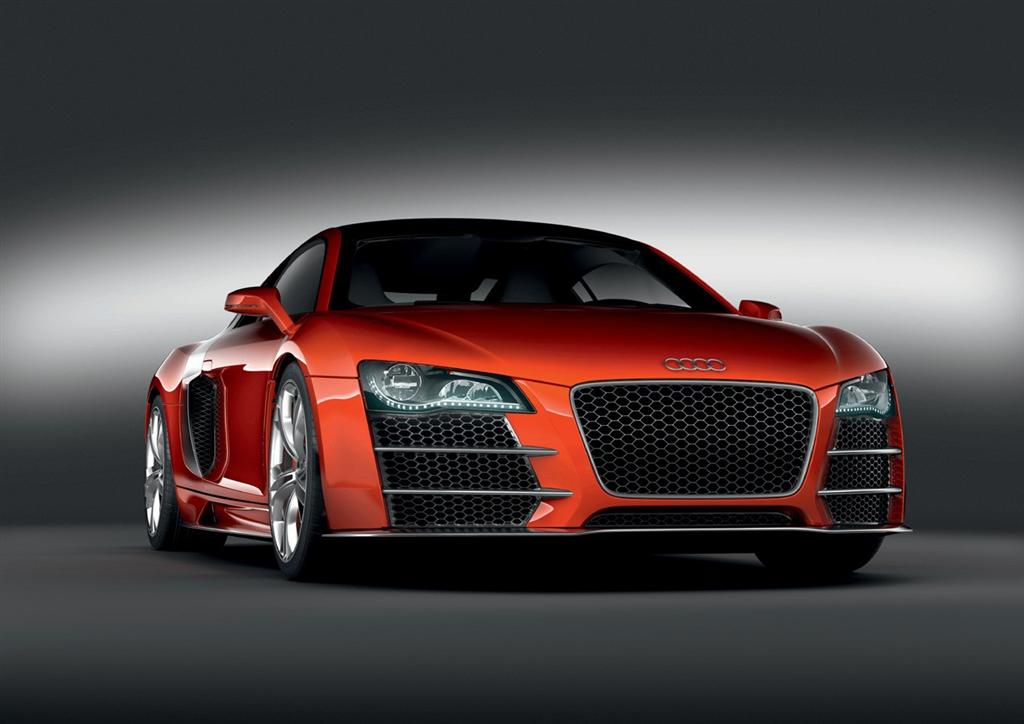
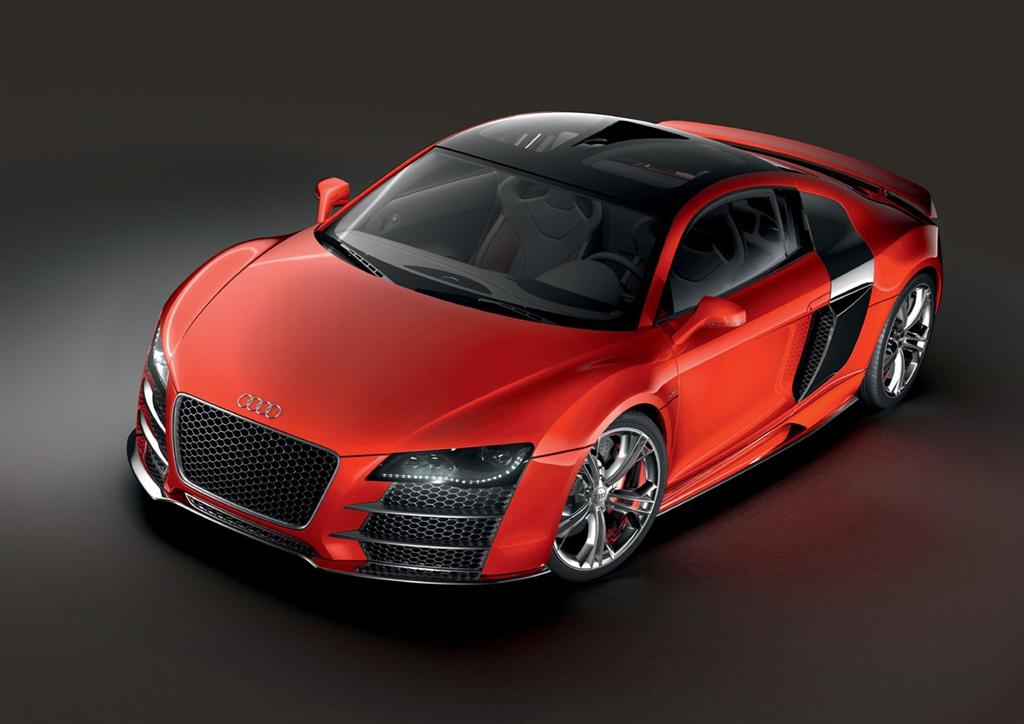
Audi is presenting a revolution in the top class – the first 12-cylinder diesel engine in a high-performance roadgoing sports car. The V12 TDI with a displacement of six liters powers a concept car based on the Audi R8. This unit generates a huge 500 hp and 1,000 Newton-meters (737.56 lb-ft) of torque. Audi is writing a new chapter in diesel technology with this power unit. Equipped with the expertise that Audi has built up through its motor sport activities, the R8 TDI Le Mans in Brilliant Red embodies superb road handling, pioneering technology and fascinating design.

The V12 TDI is closely related to the engine in the Audi R10, the two-time Le Mans winner – so it catapults the Audi R8 into supercar terrain concerning performance too. It sprints from zero to 100 km/h (62.14 mph) in just 4.2 seconds and its top speed is well over 300 km/h (186.41 mph). The peak torque, reached at only 1,750 rpm, paves the way for effortless acceleration that is unrivaled even at this level.

The new V12 TDI belongs to Audi's family of V engines but has the ideal included angle for this engine type of 60 degrees between cylinder banks. Its highlights include the new chain drive layout that includes the two newly developed high-pressure pumps for the common rail injection system.

Its sound is as thrilling as you'd expect in a sports car of this caliber. For all the subtle smoothness that typifies this design principle, the twelve-cylinder unit is full-bodied and equipped with energetic overtones that make no secret of its performance potential.

The Genes of the Winner

Thanks to their high performance and pulling power, all Audi TDI engines are ultra-dynamic sources of power. The brand has often enough demonstrated its sporty character in its production cars, especially the six- and eight-cylinder 3.0 TDI and 4.2 TDI. Audi has also been writing a new chapter in its success story on the racetrack since 2006. The diesel engine in the R10 sports prototype won its very first endurance race at Sebring, Florida, when it was pitted against an entire field of gasoline-engined challengers. But its most crucial victories were surely in 2006 and 2007 in the 24 Hours of Le Mans, when it simply outclassed the international elite.

The V12 TDI race engine in the R10 produces over 650 hp from a displacement of 5.5 liters, giving it the potential for a top speed as high as 330 km/h (205.05 mph) depending on the gear ratios. Its power and sturdiness immediately impressed both fans and experts, who were impressed by its restrained noise level. Unusual for a race engine, this powerful Audi diesel makes barely more than a whisper.

Long traditions of motor racing and production technology complement each other at Audi. The FSI engine of the R10's predecessor, the R8, captured five wins at Le Mans with a direct gasoline injection system. Audi is also looking to maximize the advantage by using the race-tested FSI principle in its production models. The latest examples of this are the V8 with high-revving concept in the RS 4 and the production version of the Audi R8.

The Drivetrain


The roadgoing version of the new V12 TDI is built at the Györ plant, in Hungary. And the R8 TDI Le Mans still has a massive 500 hp on tap. In developing the six-liter engine, it was a clear priority to integrate it into the current family of Audi V engines, of which many thousands of versions with 6, 8 and 10 cylinders have already been built – both gasoline and TDI.

Audi's engineers were in an ideal position to use their experience building the racing engine to develop the road version. Like the other power units in this range, the distance between cylinder bore axes on the V12 TDI is 90 mm (3.54 in.). Yet its included angle is 60 degrees, not 90 degrees. This means no free inertial forces or mass moments of inertia can occur with the V12. The results are refined in every respect.

The 83.0 mm (3.27 in.) bore and 91.4 mm (3.60 in.) stroke produce a total displacement of 5,934 cc – just like the 3.0 TDI. At only 684 mm (26.93 in.) long, this large diesel engine is very compact and just 166 mm (6.54 in.) longer than the V8 TDI. This compact length is key to accommodating the V12 in the mid-engined Audi R8.

The V12 TDI crankcase is made from gray cast iron with vermicular graphite – a high-tech material referred to as GJV-450 that is already used on the V6 and V8 TDI engines. GJV-450, made by a patented casting process, is about 40 percent more rigid and 100 percent more fatigue-resistant than gray cast iron. This enabled the developers to make its walls thinner, cutting its weight by around 15 percent compared with conventional gray cast iron.

The two cylinder heads are each made from three main elements. These are a base section made from a high-strength aluminum alloy incorporating the intake and exhaust ports, an oil-bearing upper section, and a reinforcing ladder frame supporting the two camshafts.

The valves are actuated by low-friction roller cam followers; the compression ratio is 16.0:1. Map-controlled swirl variation of the combustion air has been adopted from the V6 and V8 TDI engines. This produces permanently optimized swirl concerning both emissions and high performance.

Ultramodern Injection Technology

As is the case in the Audi V engines, the no-maintenance chain drive is mounted at the back of the engine, where it occupies little space. Its layout has changed on the new V12 TDI. The camshafts' sprocket engages in an intermediate gear via which two Simplex chains drive the camshafts. Two more chains drive the oil pump and the two high-pressure pumps actuate the common rail injection system.

The two new dual-piston high-pressure pumps form part of the common rail injection system supplied by specialty manufacturer Bosch. The two pumps build up a pressure of up to 2,000 bar in the rails. The piezo injectors with eight-hole nozzles have also been fundamentally revised.

The high pressure distributes the mixture optimally throughout the combustion chamber. The result is that the ignition process is faster, more homogeneous and more acoustically refined. The more efficient combustion process also increases power output, cuts consumption and reduces pollutant emissions.

The current generation of so-called inline injectors makes effective use of the piezo effect: piezo crystals expand in a fraction of a millisecond when an electrical voltage is applied. The number of injection processes per operating cycle can be varied across a wide range thanks to piezo technology – reaching as many as five fuel injection operations in the case of the V12 TDI.

As well as the main injection, pilot and post injections are possible. Pilot injections tone down the acoustic harshness of the combustion process. Retarded post injections are designed specifically to increase the temperature of the exhaust gas, promoting regeneration of the two standard particulate filters.

The two turbochargers are located on the outside of the engine's V, each of them supplying one bank of cylinders. Thanks to their variable turbine geometry, the full flow of exhaust gas always passes through the turbine, so the chargers respond slickly – even at low engine speeds – and operate very efficiently.

The two turbochargers, which generate up to 2.6 bar of boost pressure, play a crucial role in producing the huge torque of 1,000 Nm (737.56 lb-ft) that the V12 TDI maintains from 1,750 rpm to 3,000 rpm. In developing 368 kW (500 hp), the diesel achieves a specific output of 62.0 kW (84.3 hp) per liter displacement.

Two large intercoolers reduce the temperature of the compressed air. The V12 has a twin-pipe exhaust system with two particulate filters. The intake system is similar in structure with one air cleaner per cylinder bank, with an airflow meter behind it. Two control units, sharing the workload in a master/slave principle, manage events in the engine.

The Audi R8 TDI Le Mans already fulfills the Euro 6 emissions standard that is likely to take effect in 2014 and calls for sharply reduced nitrogen oxides. By also designing in ultra-precise fuel metering by the common rail system, Audi's engineers have made full use of current clean diesel technology.

The heart of the system is a special catalytic converter downstream of the oxidizing catalyst and the particulate filter. The second component in the system is an additional tank containing an aqueous urea solution. Small quantities of the solution, known as 'AdBlue,' are injected into the exhaust system. The hot exhaust gases break the solution down to form ammonia that splits the nitric oxides into nitrogen and water. The system remains effective for the entire service life of the vehicle.

The dynamic character of a sports car depends not just on its performance and torque; the transmission ratios have to be right too. In keeping with the character of a high-performance sports car with unbeatable torque potential, the transmission in the R8 TDI Le Mans has six manually operated gears.

The manual transmission is very compact in design. Together with the small-diameter double-plate clutch, this means it can be installed low down. The manual transmission has very short shift travel and utterly precise guiding of the shifter into the open gear lever gate. It is made from polished aluminum, has an agreeable feel and exquisite sports car looks.

Such a high-performance Audi also has quattro permanent all-wheel drive. In the case of this mid-engine sports car, power is distributed variably between the front and rear wheels from a starting ratio of 40:60 to optimize the handling.

The Design


The R8 TDI Le Mans with Brilliant Red bodywork looks even wider and more resolute than the core model. It shows its potential through its muscular proportions, accentuated wheel arches and even larger air apertures. The rhombus-pattern cover on the air inlets and outlets is the hallmark of Audi's sporty top models and a familiar feature of the current RS generation.

Typical of the side view of the R8 is the sideblade. Much wider in the bottom third, it visually accentuates the engine's position as well as acting as an enlarged air deflector.

The continuous aluminum spoiler lip that connects the front and rear diffusers with side air baffles below the enlarged sills also pays tribute to this version's highly developed dynamic talents.

And yet the R8 is unmistakable for its powerful, elegant basic proportions. The selective but always precise use of lines is another typical Audi characteristic, as is the curved arc of the roof. One new aspect is the glass roof of the passenger compartment with two large transparent sections. These, together with the glazed engine compartment behind, create a radically new formal element. The unmistakable NACA duct in the middle of the roof is a functional detail that is normally reserved for racing cars. Its ingenious shape accelerates the air drawn in here for the two cylinder banks of the V12 TDI engine.

The V12 TDI is displayed as the beating heart of this sports car, like a work of art inside a large showcase. Its look, underscored by the air deflectors located beneath the restyled rear glass lid, differs clearly from its production counterpart. The engine can even be seen after dark, when white light-emitting diodes illuminate the engine compartment – as on the production R8 version. This 'showroom' can additionally be fully lined in genuine carbon fiber, for a particularly exclusive look.

The continuous line running from the front apron across the wheel arches and flanks to the tail end, then back down the other side, is one of the latest design hallmarks of the Audi brand. This 'loop' naturally encompasses the air apertures, the headlights and the taillights.

Unmistakable Face by Day and Night

The passion expressed through the elaborate design of the lights is another typical Audi trait. Nor is anyone likely to overlook this Audi sports car from behind: the LED taillights have a three-dimensional look that can't be missed.

But the absolute highlight is the all-LED headlights of the study vehicle. With their lenses and reflectors, not only do these innovative light sources have a ground-breaking appearance, they also have an enormous functional advantage: LED light, with its color temperature of 6,000 Kelvin, resembles daylight much more closely than xenon or even halogen light. Better light means the driver will have much less fatigue when driving at night.

Ergonomic and Elegant

The interior's design is as sporty and exclusive as the exterior: the characteristic element here is the monoposto – an expansive arc running around the steering wheel and instruments, connecting the driver to the car. The interior consequently picks up on the dynamism of the R8 TDI Le Mans and gives it tactile expression in a form that is accessible the moment you climb in.

The three-spoke sport steering wheel of course remains the focal point of the car's controls. With a diameter of 365 mm (14.37 in.), it is both sportily compact and ergonomic in shape. The steering wheel rim has a flat lower edge. This is a further aspect of the auto racing feel in the Audi R8 TDI Le Mans, but one that also brings major functional benefits, facilitating entry and exit for the driver. The steering wheel is covered in fine Valcona leather, with a diecast magnesium core providing strength.

The start/stop button for the engine and the Drive Select switch with the Dynamic/ Sport/Race settings are arranged on the steering wheel. The latter controls the engine and transmission electronics as well as the magnetic ride dampeners in each of three different modes.

In Race mode, the instrument lighting changes from white to red. The navigation system shows a combined display with lap timer and navigation information for the racetrack being driven. Or supplementary information such as centrifugal force and boost pressure can be called up.

Concentrating on the essentials was the priority in the ergonomic arrangement of all Audi R8 versions. The most important consideration – particularly for high-speed driving – is short reach distances for all controls, to keep the time that the driver has only one hand on the steering wheel to a bare minimum. In typical Audi style the monitor is well within the field of view, and the elements of the MMI operating system are located directly below it.

Compared with the production version, the R8 TDI Le Mans's interior has much larger aluminum applications, especially around the center console. The many carbon fiber elements give the interior a decidedly sporty feel.

The R8's exceptional everyday practicality for a sports car is maintained in the study vehicle's spaciousness, even though the longer engine takes up more room. The two occupants have the generous wheelbase of 2.65 meters (8.69 ft.) to thank for the interior comfort. This means the driver and passenger will always be able to find their perfect seated position, whatever their build. The view is also very good for a mid-engine vehicle. Narrow A-posts optimize the field of view to the front and sides.

Light but Highly Rigid Body

The body of a sports car needs to be particularly light and rigid. Low weight permits superior road performance, and rigidity is the crucial starting point for an agile driving feel allied to high precision. The Audi Space Frame body, made from aluminum, provides the ideal basis for this.

Audi has more expertise than any other manufacturer worldwide in the design and production of vehicles based on aluminum technology, and has channeled its accumulated know-how into this area.

The entire bodyshell of the study car weighs just 210 kilograms (462.97 lbs.). In ASF technology, the body's supporting structure is made of extruded aluminum sections and die-castings. Aluminum panels are incorporated into this skeleton to form a positive connection and perform a load-bearing role. Each individual component of the ASF space frame is optimized for its specific task by the use of widely differing shapes and cross-sections, combining maximum stability with minimal weight. It adds up to a car that's particularly light and rigid, an outcome that can be felt in the R8's ultra-precise driving feel.

The aerodynamics experts at Audi have done their work so thoroughly on the study car that, as an added benefit of its elegant shape, the body actually generates downforce – unlike many other sports cars. This aids directional stability at high speeds. It is achieved partly by means of an extending rear spoiler that is much larger than on the production version, and also thanks to the fully clad diffuser underbody.

Two large-format diffuser apertures in the rear bumper demonstrate just how much aerodynamics dictate the shape of the study vehicle. The tailpipes of the exhaust system are located in pairs on the right and left above the diffuser apertures. The add-on, automatically extended rear spoiler also interacts with the air as it flows around the car. The extra downforce it provides increases the efficiency of the air intake generated by the aerodynamic design of the underbody and diffusers. At low speeds, the rear spoiler returns to its initial position.

Chassis

The precision chassis of the Audi R8 TDI Le Mans remains supremely in control of the sporty performance, but is capable of assuring relaxed driving pleasure over long distances too. The sports car is spontaneous and agile at obeying steering movements, always demonstrating exceptionally good driving safety. The suspension, with double wishbones at both the front and rear, is optimized for a neutral self-steering response and maximum ease of control.

The study car, too, has the innovative dampening technology known as Audi magnetic ride. This adapts the chassis characteristic to the profile of the road and the driver's style within milliseconds.

Ceramic Brakes with Extreme Reserves

A generously dimensioned brake system supplies the necessary braking force. It applies a total of 24 pistons to the four brake disks, combining excellent performance with minimal weight and high durability. The disks are made from carbon fiber reinforced ceramic, a material that has repeatedly proven its worth in the aviation and aerospace sectors. The basis is very hard, frictionally resistant silicon carbide, with its diamond-like crystalline structure. Embedded in it are high-strength carbon fibers that absorb the stresses occurring in the material. The intricate geometry of cooling ducts in the ventilated disks prevents extremely high temperatures. The ceramic brake disk ring is bolted by 10 spring-loaded elements to a stainless steel central element that acts as the connection with the wheel's hub.

The ceramic brakes are identifiable at a glance by the special red, six-piston monobloc aluminum calipers and the fixed calipers at the rear. The advantages of the ceramic brakes include a further reduction in weight of around 20 kilograms (44.09 lbs.), which in this case improves the handling characteristics and comfort. The high abrasion resistance permits an operating life of up to 300,000 kilometers (186,411 miles). Their key strength, however, is their ability to withstand very high loads. Even on the racetrack, for example, the ceramic brakes always maintain their full reserve performance.

Vorsprung durch Technik: Diesel Milestones from Audi


Audi has reached another milestone in diesel technology with the new V12 TDI. The brand with the four rings has been performing vital pioneering work in this area for the past three decades. The first TDI auto engine made its debut in 1989. The 2.5 liter five-cylinder power unit developed 88 kW (120 hp) and 261 Nm, catapulting diesel driving into an entirely new dimension.

This was followed in 1994 by a development version generating 103 kW (140 hp). This engine was optionally available with all-wheel drive – the first TDI quattro model. A new four-cylinder diesel appeared at that time in the Audi 100 and Audi 80, the 1.9 TDI developing 66 kW (90 hp) that has now become legendary.

At the end of 1995 the output of this four-cylinder unit rose to 85 kW (115 hp) with the advent of pump-injector fuel injection. Slightly more than one year later, at the start of 1997, the world's first 2.5 V6 TDI appeared.

With four valves per cylinder, it achieved an output of 110 kW (150 hp), and its top speed of 220 km/h (136.70 mph) made the Audi A8 the fastest production diesel on the market. The first eight-cylinder TDI followed in 1999 – a V8 engine with a 3.3 liter capacity. The 3.0 TDI made its debut early in 2004 as the first V6 diesel with inline piezo injectors in the common rail system.

The 4.2 liter TDI launched in the A8 in 2005 is currently at the vanguard of Audi's TDI range. One in three A8 buyers in Germany chose this V8 engine. The next logical step was to make the V8 TDI available in the Audi Q7 in summer 2007.

With extremely clean, ultra-low emission technology, Audi is continuing its tradition of leadership in diesel engine technology. In 1989 it was the Ingolstadt brand that developed direct injection technology. Since then the diesel engine has become around 30 percent more efficient.

The Euro 4 European emission standard has reduced particulate emissions for cars by 93 percent. Long before it came into force, Audi had models on the market that met this standard, even without a particulate filter. And the brand will be offering the world's cleanest diesel engines in production vehicles in 2008. The TDI engines with the ultra-low emission system will be the first in the world to meet the forthcoming EU 6 emission standard as well as the toughest known statutory limits that apply in the U.S.

Source - Audi